
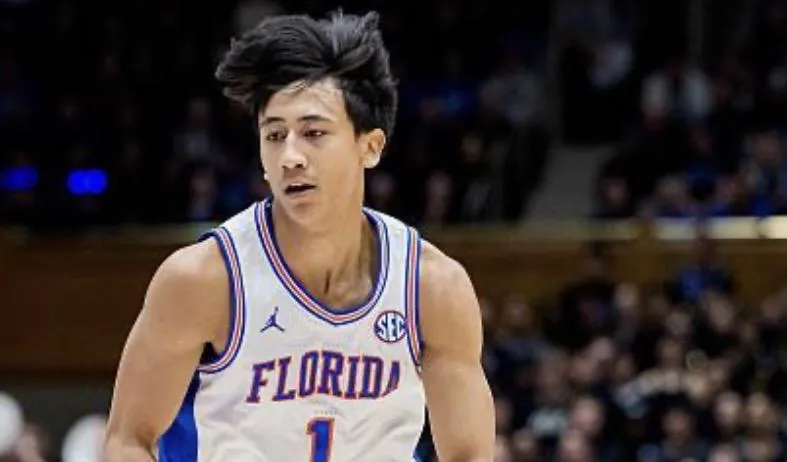
Xaivian Lee's struggles expose NIL issues
Alone in Gainesville
This past weekend, I attended Auburn’s huge victory over the University of Florida in Gainesville. The game itself was fantastic. Athleticism, tactics, and effort were all on display. But I couldn’t take my eyes off one player — a player in a uniquely modern situation brought on by the introduction of Name, Image, and Likeness (NIL) and the transfer portal.

Xaivian Lee (Toronto) joined the Gators after three years at Princeton, reportedly signing a $6 million NIL agreement (one of the largest in NCAA men's basketball this year) to “take his talents” to Florida. Top programs such as Kansas, St. John’s, Duke, and BYU were all in the running for this exceptional Canadian talent via the Ivy League. Historically, neither the country nor the conference has been regarded as a hotbed of basketball talent — although Canada has certainly changed that narrative over the past decade. Yes, I am Canadian.
By all accounts, Lee was expected to be the key recruit for the defending NCAA champions — a player who could give them a chance to repeat. That expectation, however, seemed misplaced by Saturday afternoon in front of the home crowd. He played poorly against Auburn, and his statistics are well below his performance at Princeton.

On a basketball level, being the star recruit and carrying expectations to be one of the best players in the conference is one thing. It is entirely different when nearly everyone — including teammates and coaches — is crystal clear on what you are being paid to do. Six million dollars for the 2025–26 season. Wow. The next-highest reported NIL deal on the team is $2 million.
I found it hard to take my eyes off Lee, both on the court and on the bench. His body language told a story. In my mind, he lacked belief — and possibly experienced the weight of shame or guilt. If he could have escaped on Saturday, he surely would have.
Ten years ago, even the most talented player from Princeton would not have considered transferring with one year remaining in their eligibility or academic journey. Today, well… today is very different.

As I watched Lee struggle in the second half and sit silently on the Gator bench, I wondered: How do his teammates feel? Who is to blame for this? Or, is there even a need to blame anyone? After all, he is making life-altering money.
Ultimately, I concluded that NCAA leaders who resisted athlete compensation for years in revenue-generating sports bear significant responsibility. Had the NCAA acted earlier and found a fair, structured way to compensate athletes, the current NIL chaos and transfer-portal frenzy might never have taken hold.
If leaders had led and taken what would have felt like a calculated risk, Xaivian Lee might be finishing his senior year at Princeton — likely as Ivy League Player of the Year. Top NCAA programs could be focused on coaching and team development rather than managing a shadow “salary cap” and recruiting 24/7. Instead, we now have a system that rewards player movement and the ability to raise and spend money.
Xaivian Lee is not the problem. He is simply one of the first high-profile examples of what happens when leaders don't get strategic and a system changes faster than the people inside it can adapt.


